Ayrton Senna
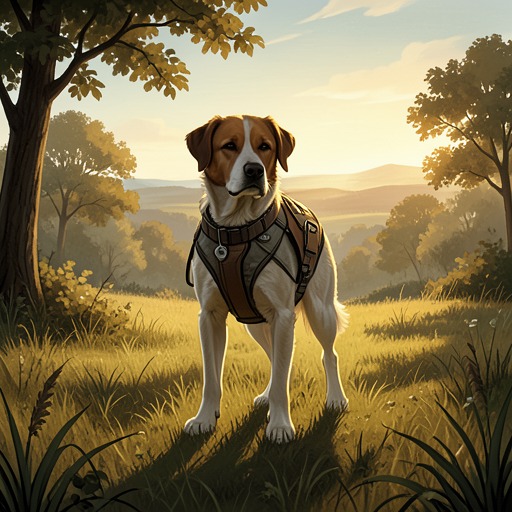
The Art of Racing in the RainAyrton Senna is a celebrated Formula One champion whose death at the 1994 San Marino Grand Prix haunts Enzo, the dog narrator of The Art of Racing in the Rain. Senna’s story enters the novel as a flash of memory during Enzo’s journey to an animal hospital, then returns through a rain-soaked race watched by Denny and Enzo together. His legacy carries two linked meanings: the peril of continuing when retreat may still be possible, and the limits of certainty when a death is surrounded by conflicting accounts.
Identity and Significance
The evidence presents Senna as a driver of exceptional stature, not as a subject whose life is recounted in full. Enzo places him among the defining champions of Formula One, alongside Juan Manuel Fangio, Jim Clark, Jackie Stewart, Nelson Piquet, Alain Prost, Niki Lauda, Nigel Mansell, and Michael Schumacher. In Enzo’s imagined future for Denny, Senna is the standard a new champion might join. This comparison gives Senna an idealized place in the novel’s racing imagination: he represents both consummate skill and the cost that can accompany a driver’s commitment to the sport.
Senna’s decisive significance, however, is not simply his championship status. Enzo remembers him through a question of choice: Senna nearly quit, but raced anyway. The account makes that moment of continuation central to the meaning of his death, while leaving the circumstances of the death itself unsettled.
The 1994 San Marino Grand Prix
Enzo’s recollection centers on the San Marino Grand Prix at Imola, on May 1, 1994. The weekend had already been marked by serious danger. On Saturday, Senna’s friend and protégé Rubens Barrichello was badly injured in an accident, and another driver, Roland Ratzenberger, died during practice. Disturbed by the circuit’s safety conditions, Senna brought the drivers together on race morning to form a safety group and was elected its head.
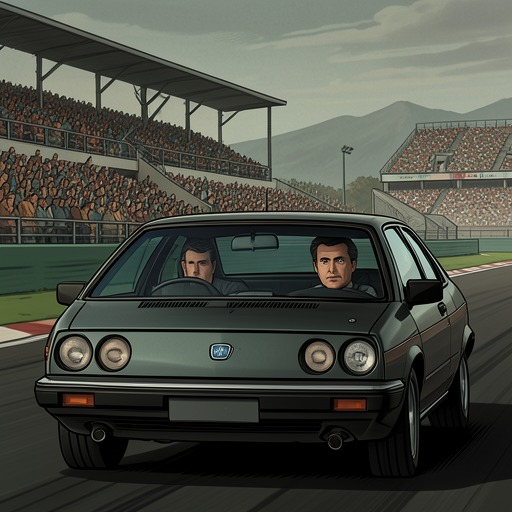
The narration also reports that Senna seriously considered retiring that Sunday. He almost walked away from the race, but did not. When his car failed to turn at Tamburello Corner, it left the circuit at nearly 190 miles per hour and struck a concrete barrier. Senna was killed. In Enzo’s account, the contrast between the possibility of stopping and the decision to race gives the crash its tragic force; the narrative does not establish that quitting would certainly have prevented his death, but it places the unrealized alternative beside the fatal outcome.
A Death Surrounded by Conflicting Accounts
The exact moment of Senna’s death remains disputed in Enzo’s telling. The narration offers several competing possibilities: that he died at the circuit after being removed from the wreckage, or that he died in the helicopter carrying him to the hospital. It does not resolve these versions. Instead, Senna’s enigmatic public image is extended into death, where disagreement becomes part of how his story is remembered.
Enzo points to missing onboard-camera footage, differing accounts, and the involvement of the Fédération Internationale de l’Automobile as elements of the controversy. He also describes a possible financial incentive for allowing the race to continue: if a driver died at the circuit, an investigation would begin immediately and the race would stop, affecting revenue for the governing body, sponsors, the track, and television. If death occurred later in a helicopter, the race could continue. This is presented as a consequential possibility within Enzo’s account, not as proof of a particular decision or a settled explanation of what happened.
The testimony of Sidney Watkins, the first man said to have reached Senna, offers a different kind of evidence. Watkins reportedly recalled that Senna sighed as he was lifted from the cockpit and laid on the ground, and that he felt Senna’s soul depart then. Enzo gives this recollection weight while also placing it amid incompatible accounts. The result is not a final verdict, but a tension between personal witness, public uncertainty, and the commercial stakes Enzo believes may have shaped the aftermath.
Memory, Racing, and Enzo’s Point of View
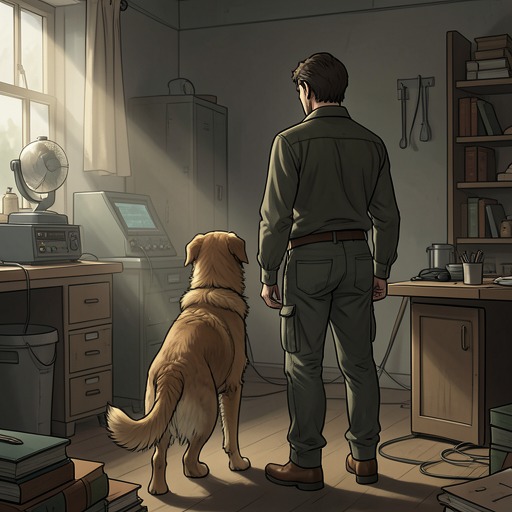
Senna’s death comes to Enzo as a sudden memory while Enzo lies in pain in the back of Denny’s car on the way to the animal hospital. That framing makes the account intimate, but not omniscient: Senna is recalled through a narrator who was not a participant in the Grand Prix and who elsewhere acknowledges the limits of what he can know. When describing Denny’s trial, Enzo distinguishes facts learned from Denny’s retelling from courtroom scenes he invented in dreams. His first-person certainty about Senna therefore sits within a narrative that also exposes the difference between witnessed fact, received account, and imagination.
The novel further complicates Enzo’s interpretations through the episode of the dancing zebra. During a period alone and hungry, Enzo sees a stuffed toy moving and later assumes it has destroyed Zoë’s toys; he subsequently recognizes the zebra as an image of inner fear and self-destructive impulses. This does not disprove his account of Senna’s death, but it shows why his confident declarations must be read alongside his acknowledged limits and his tendency to make meaning from uncertain experience.
A later scene gives Senna a less tragic, more affirmative presence. After Denny bathes Enzo, he puts on a recording of the 1984 Monaco Grand Prix. Denny and Enzo watch Senna drive through the rain in pursuit of Alain Prost. Enzo believes Senna would have won had the race not been stopped because of the conditions, and describes the rain as a setting in which Senna excelled. The shared viewing binds the champion to Denny and Enzo’s companionship, recalling racing not only as danger, but also as skill, attention, and a source of pleasure between them.
Legacy and the Imagined Future
Enzo’s prediction that Denny will become a Formula One champion like Senna is explicitly a vision of the future, not an event the narrative confirms. He imagines Denny going to Maranello, earning a place with Ferrari, and rising from test driver to champion; Senna supplies the name that makes this hope legible. Enzo longs to witness Denny’s reunion with Zoë and the life that might follow, but recognizes that he may not live to see it.
That imagined succession does not erase Senna’s contested death. Instead, the two memories hold together: the champion who nearly withdrew but raced, and the champion whose driving in the rain remains vivid on a tape watched at home. Senna’s narrative role is thus both historical and symbolic. He makes the stakes of racing palpable, while Enzo’s uncertain recollection turns the unanswered questions around his death into a meditation on risk, memory, and the difference between knowing an outcome and knowing exactly how it came to pass.